Misla

Tank divider clips, made to measure

Give us the thickness of your glass and of the divider sheet you already have — acrylic, polycarbonate, PETG or solid rigid PVC, solid or perforated — and we will cut a pair of clips whose channel is drawn for that sheet and whose slot is drawn for that glass. They hang on the top edge of two opposite glasses, stopping just above the water or reaching into it, as you choose, and a matching pair of base feet can take the bottom corners. They line the sheet up; they do not lock it: the clips sit on the glass under their own weight, so a push of a few grams moves them, and the page tells you how few for your measurements. We also work out how much narrower than the tank to cut your sheet. The channels are open at the top, so only the weight of the sheet in the water holds it on the floor: sheets that float or only just sink, such as polypropylene, polyethylene, polystyrene or foam board, are not for these clips, and we turn them down. Everything prints upside down with no supports.
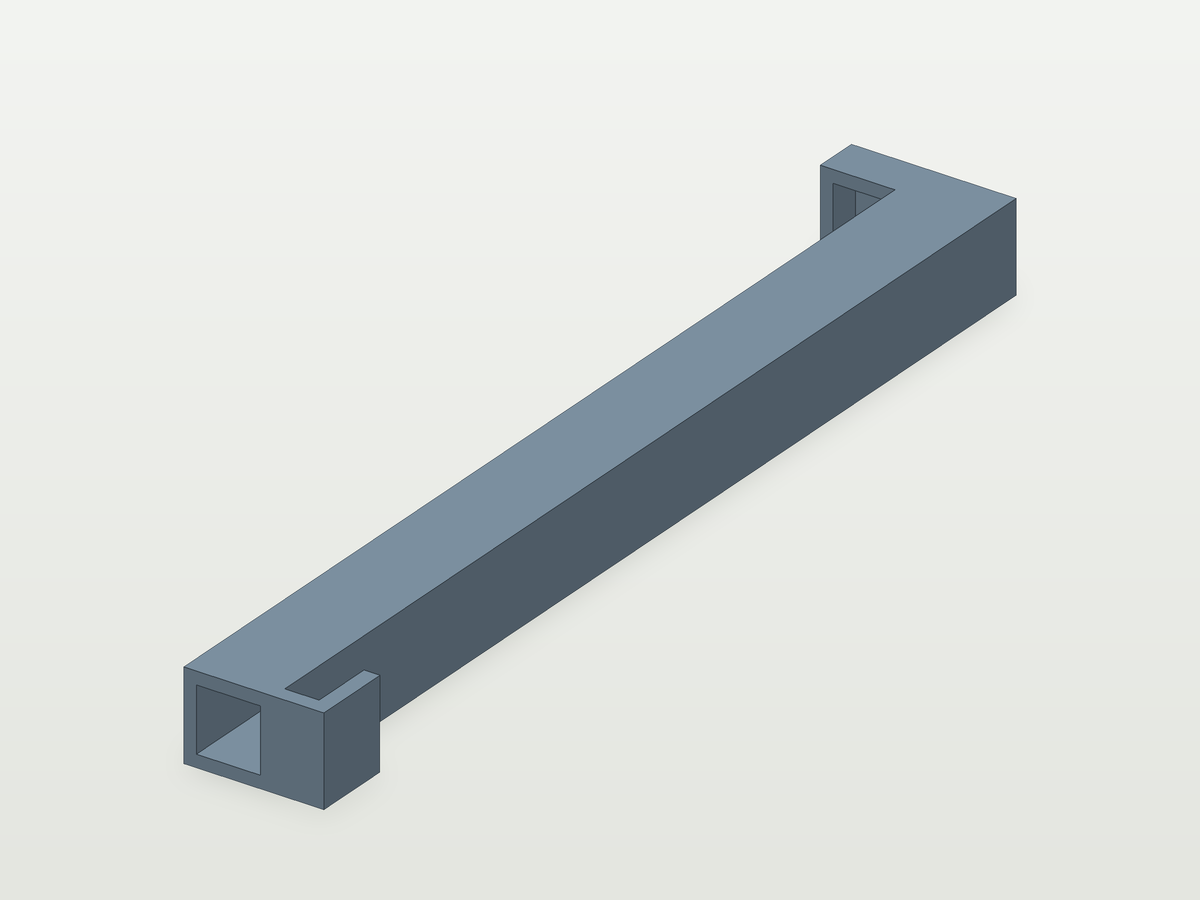
Tank divider clips, made to measure
Rendered at our default measurements — yours comes out to your numbers.
What you need before you start

What it will take

  • Glass thickness at the top edge: 3–25 mm
  • Frame depth (0 for bare glass): 0–40 mm
  • Divider sheet thickness: 1–8 mm
  • What your sheet is made of: 8 to choose from
  • How deep the channel is: 5–30 mm
  • Where the clips sit: 2 to choose from
  • From the top of the glass down to the water: 0–80 mm
  • Base feet: 2 to choose from
  • Silicone along the floor: 0–10 mm
  • Nozzle size: 4 to choose from
  • Filament: 4 to choose from

As it comes

Channel, as drawn3.50 mm
Clips reach below the top of the glass25 mm
Cut the sheet narrower than the tank, at least7.6 mm
Filament, roughly26 g

Build plate: 106 mm as it comes, never more than 256 mm.

What you need to hand

  • A caliper for the thickness of the glass (or frame) at its top edge, and for your divider sheet.
  • A ruler for the drop from the top of the glass to the water, with the tank freshly topped up.
  • A rough idea of how far the silicone runs along the floor from the glass.
  • Your own divider sheet, and a way to cut it to width — and what it is made of: acrylic, polycarbonate, PETG or solid rigid PVC.
  • Your nozzle size and the filament you will print it in.

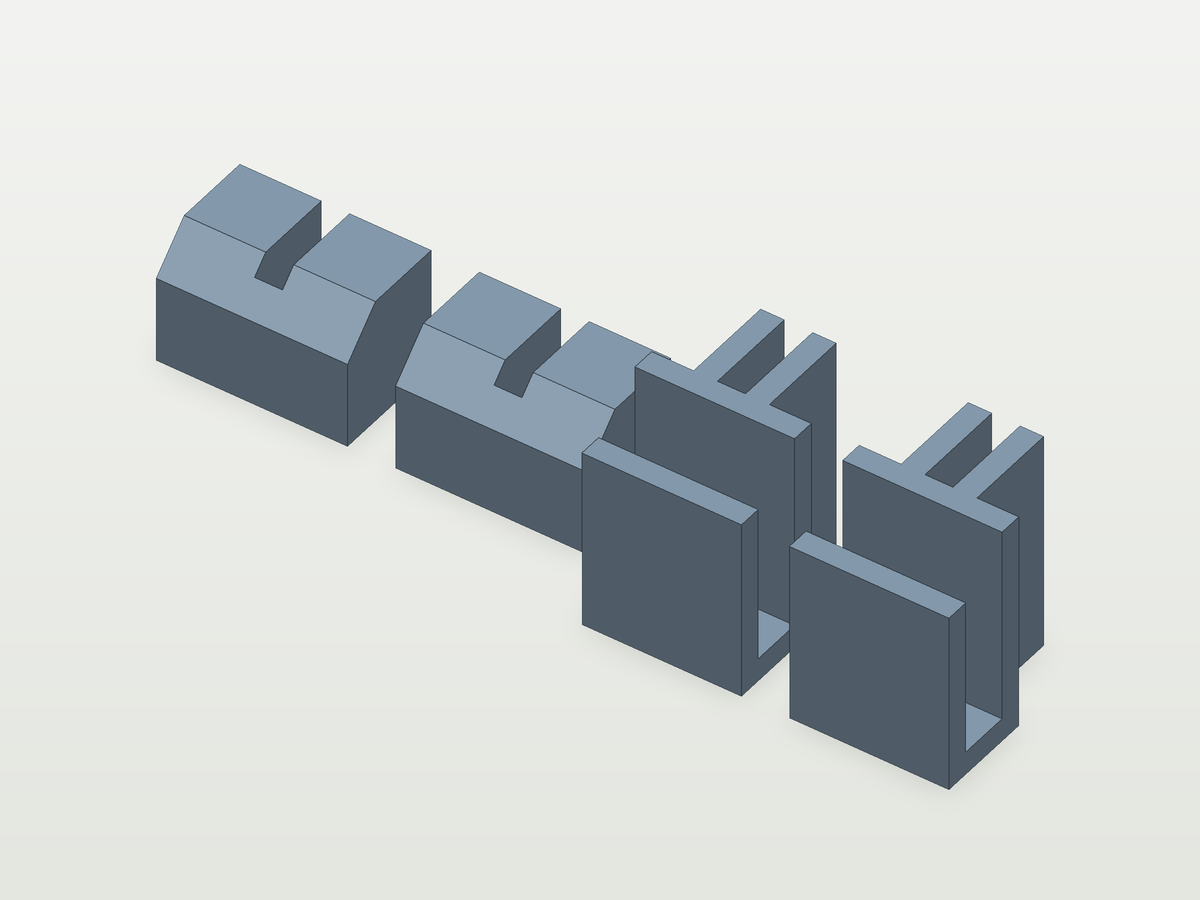
The part, drawn to your numbers

106 mm28 mm20 mm · 1:2
From the front, as they print — upside down, the two clips and the two feet side by side on the plate

Drawn from the numbers in the form below, off the same geometry the file is cut from. It is not a photograph, and there is no photograph — every part that leaves here is a different size.

Your glass

Measure the top edge where the clips will sit, with a caliper. On a tank with a plastic frame, measure the frame and how far it comes down.

mm
Measure across the top edge with a caliper, where the clips will sit: the glass itself on a rimless tank, or the whole frame on a tank with a plastic frame round the top.
mm
If your tank has a plastic frame round the top, how far its straight sides come down from the top. Leave it at 0 for a bare glass edge. On a frame, the clips can only hold on to the frame, so a shallow one lets them rock more.
Your divider sheet

The sheet is yours: measure its thickness and tell us what it is made of. We draw the channel for it, tell you how much narrower than the tank to cut it, and turn down a sheet that would float.

mm
The sheet you already have, solid or perforated. Measure it with a caliper in a few places along the edge and give us the thickest: sheets are seldom exactly their nominal size.
The channels are open at the top and nothing in the clips or the feet holds the sheet down: only its own weight in the water holds it on the floor. A sheet that floats, or only just sinks, can lift off the floor, so we turn those down. If you are not sure, the seller will know; a scrap that floats in a glass of water rules a sheet out.
mm
How far the edge of the sheet can go into each clip. A deeper channel gives you more room when you cut the sheet; a shallower one bends less when the sheet is pushed.
Your water and your floor

Measure with the tank freshly topped up. The silicone is the bead along the bottom of the glass, where the sheet will stand.

Above the water, the clips stay dry and stop just over a full tank. Into the water, they reach further down and take more of the edge of the sheet.
mm
With the tank freshly topped up: the drop from the top edge of the glass to the surface of the water.
A pair of feet for the bottom corners of the sheet, with the same channel as the clips.
mm
How far the bead of silicone runs out from the glass along the floor of the tank, where the sheet will stand. The feet are cut back to clear it, and we tell you how much to trim off the bottom corners of the sheet.
The printer it will come off

These two are facts about your bench, and both have a right answer already filled in. They decide whether the walls come out the thickness we drew, which is why we ask.

The nozzle you will print with. It does not change the model — it decides whether the walls come out the thickness we drew.
Sets the weight estimate and how much the channel walls bend, and flags PLA, which is for a dry fit only. It does not change the model.
Finer adjustments
mm
How much wider than your sheet the channel is drawn. Printed slots usually come out a little narrower than drawn, so the checks take that into account at both ends.
mm
How much wider than the glass the slot of each clip is drawn. Looser goes on more easily but rocks more, so the checks cap it.

More for your tank

  1. Airline holder for the glass

    A holder that slides over the edge of your glass and keeps one to three airlines upright down the inside, cut to your glass and your tubing.

    What you need A calliper for the glass and the outside of your airline tubing.

    Try your numbers

  2. Floating-plant corner barrier

    A corner pen for duckweed and other floating plants, cut to your glass and your water line to help keep them in one part of the surface.

    What you need A calliper for the glass at its top edge, and a ruler for the drop from there to the water.

    Try your numbers

  3. Shrimp feeding tube

    A feeding tube that hangs on your glass and ends in a small dish just above the substrate, cut to the height of your tank and the size of your food.

    What you need A ruler for the drop to the substrate and to the water, a calliper for the glass or frame, and your biggest piece of food.

    Try your numbers

Similar parts: Clips · Tank glass edge

See all 10 in Aquarium

Reviews

No reviews yet.

Reviews come from subscribers who have downloaded this part.