Misla

Drill holder, made for your set

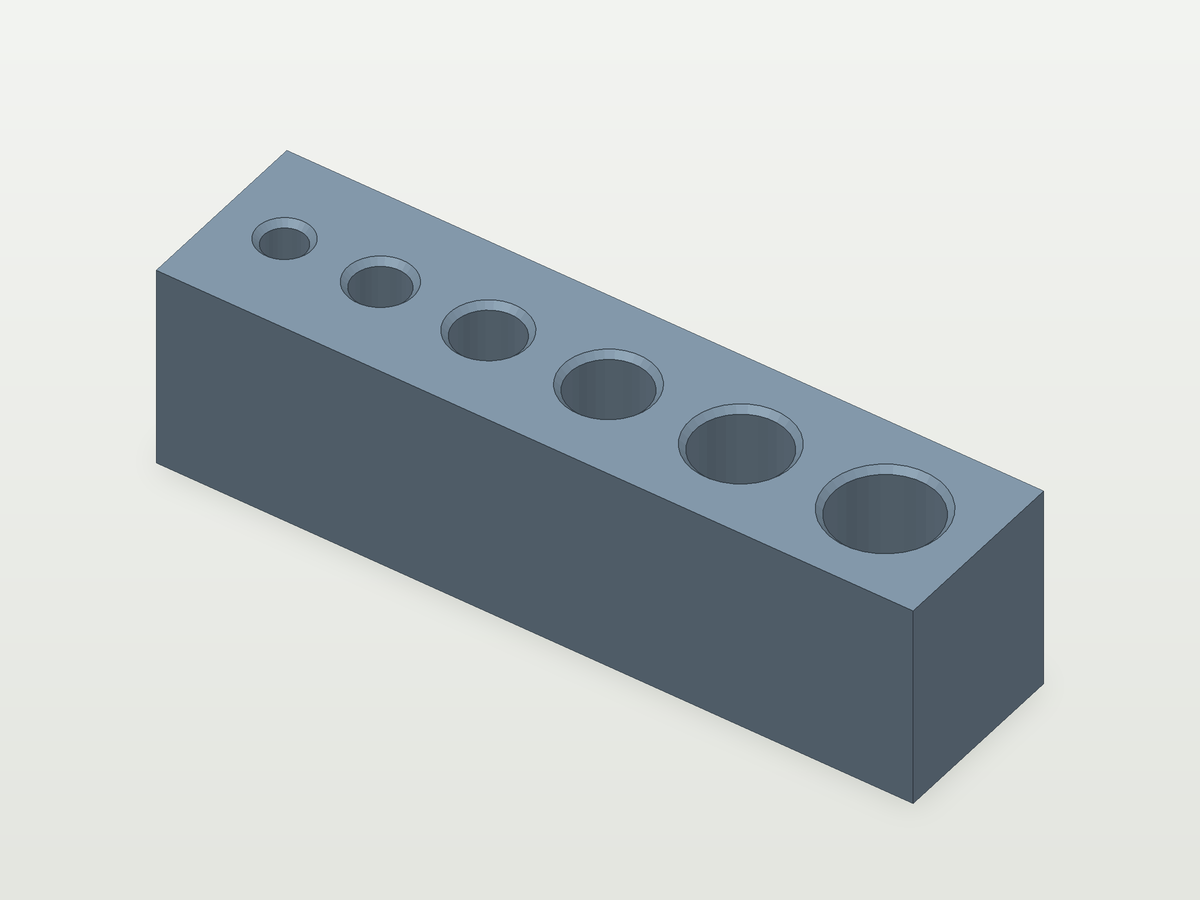
Tell us the smallest and the largest drill in your set and the step between sizes, and we cut a block with a row of holes, smallest to largest, each drawn a little over its drill so it drops in, with a bevel round the top. You choose how deep the drills sit and how much plastic is left between them. It prints standing up, with no supports.

Drill holder, made for your set
Rendered at our default measurements — yours comes out to your numbers.
What you need before you start

What it will take

  • Smallest drill: 1–16 mm
  • Largest drill: 1–16 mm
  • Step between sizes: 0.5–5 mm
  • How deep each drill sits: 5–60 mm
  • Plastic between holes: 1–20 mm
  • Bevel on the holes: 0–2 mm
  • Nozzle size: 5 to choose from
  • Filament: 4 to choose from

As it comes

Holes6
Length62.4 mm
Height17 mm
Filament, roughly17.3 g

Build plate: 63 mm as it comes, never more than 256 mm.

What you need to hand

  • The smallest and the largest drill in your set, off their markings or a calliper.
  • The step between sizes in the set.
  • How deep you want the drills to sit.
  • Your nozzle size and the filament you will print it in.
Your drills

The smallest and the largest drill in your set, and the step between sizes. The largest gets a hole even if the last step does not land on it.

mm
The smallest drill in your set, measured across the shank with a calliper, or read off its marking.
mm
The largest drill in your set. If it is the same as the smallest, you get a block of one hole.
mm
How far apart the sizes in your set are: 1 for 3, 4, 5, 6; 0.5 for 3, 3.5, 4. If the last step does not land on the largest, the largest gets a hole anyway.
The block

How deep the drills sit, how much plastic is left between them and the bevel round each hole. If the row is too long for the plate, we say what fits.

mm
How far each drill goes into the block. The rest stands out of the top.
mm
How much plastic is left between one hole and the next, and between the outer holes and the edge, at the top. More leaves room for your fingers.
mm
A 45° bevel round the top of every hole, so each drill finds its way in.
The printer it will come off

Set these to the nozzle you will print with and the filament you will use. The nozzle decides whether the walls and the floor come out the way we drew them; the filament only sets the weight estimate.

The nozzle you will print with. It does not change the model — it decides whether the walls and the floor come out the way we drew them.
Sets the weight estimate. It does not change the model.
Finer adjustments
mm
How thick the block is under the bottom of the holes.
mm
How much bigger than each drill its hole is drawn. Printed holes come out a little small, so we need at least 0.25 mm; more drops in more easily but leans.

More for the workshop

  1. Screwdriver rack

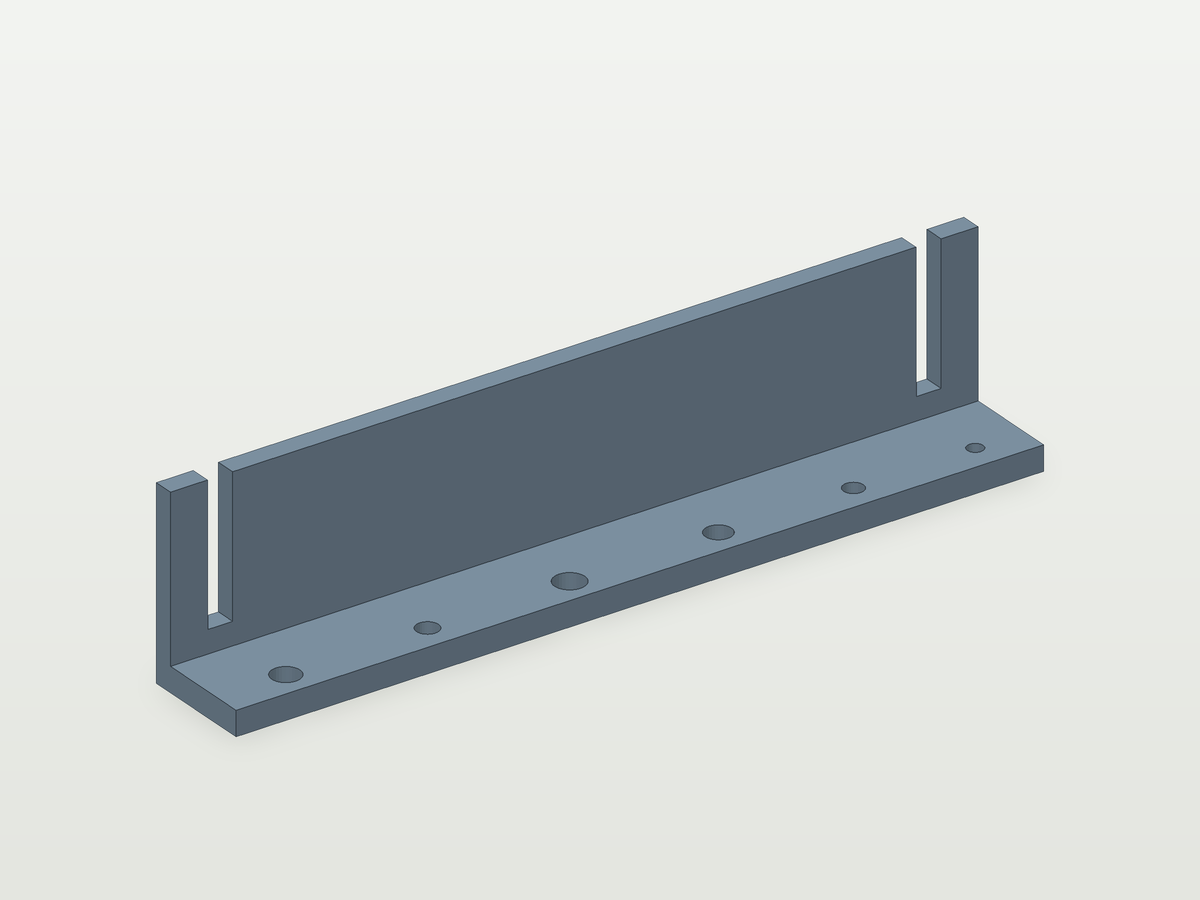
    A wall rack for the screwdrivers you already own, with each hole cut to its driver and spaced for its handle.

    What you need A caliper, the screwdrivers for the rack, your wall space, and the wall screws and washers you will use.

    Try your numbers

  2. Holder for hex bits

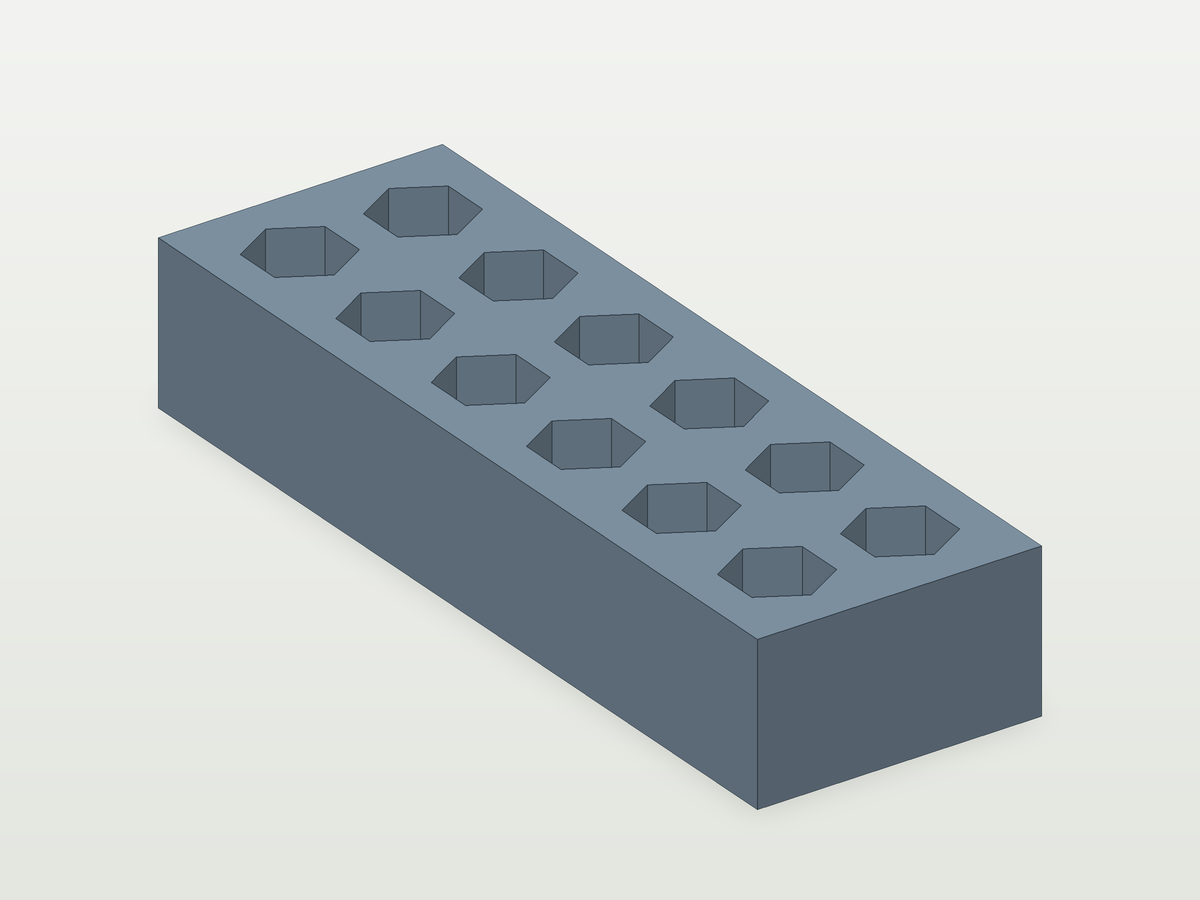
    A block of hexagonal pockets for screwdriver and drill bits, in the grid you choose, drawn from the bit you measure.

    What you need A calliper for the hexagon of your bits, across the flats.

    Try your numbers

  3. Hex key stand

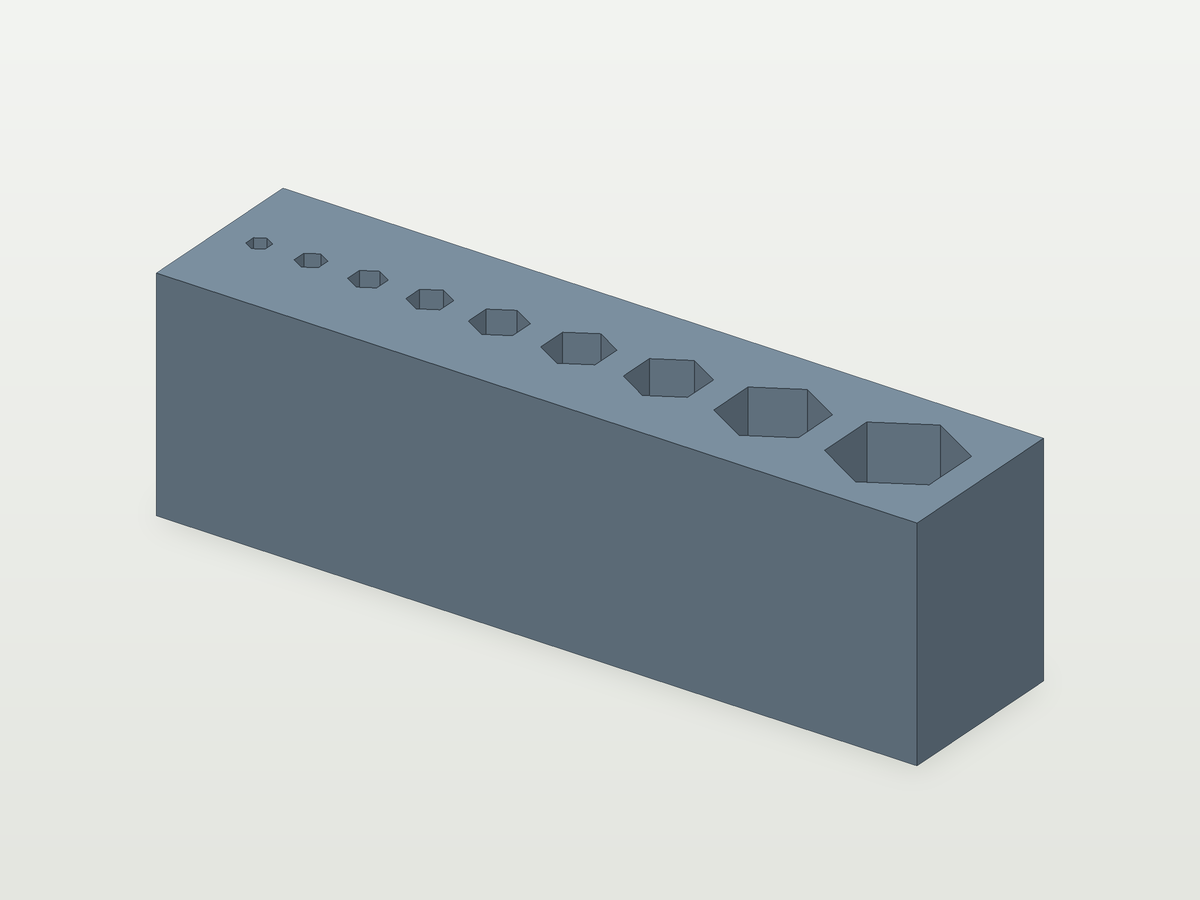
    A bench block with a hexagonal hole for each key in your set, sized across the flats with the clearance you pick.

    What you need Your set of hex keys, to pick the matching set.

    Try your numbers

Similar parts: Racks and organisers · Tools and bits

See all 13 in Workshop and filament

Reviews

No reviews yet.

Reviews come from subscribers who have downloaded this part.