Misla

Remaining-filament gauge, made to measure for your spool

Measure an empty spool and a new one of the same kind, and copy the weight off the label. We cut a flat gauge that slides between the flanges of that spool until its tip rests on the filament: the mark level with the edge of the flanges tells you roughly how many grams are left on one side, and how many metres on the other. The scale is worked out from your spool, not copied from a chart, and it crowds together towards a full spool the way the filament does. Prints flat, no supports.

Remaining-filament gauge, made to measure for your spool
Rendered at our default measurements — yours comes out to your numbers.
What you need before you start

What it will take

  • Flange diameter: 100–330 mm
  • Drum diameter: 30–200 mm
  • Inside width: 20–120 mm
  • Gap on a new spool: 0–40 mm
  • Net weight on the label: 100–5000 g
  • Filament on the spool: 5 to choose from
  • Filament diameter: 2 to choose from
  • Grams between marks: 8 to choose from
  • Number height: 3–8 mm
  • Nozzle size: 5 to choose from

As it comes

One mark every100 g
Filament on a new spool, by our sums335 m
One layer of filament on a full spool, roughly49 g
Gauge length70.0 mm

Build plate: 70 mm as it comes, never more than 256 mm.

What you need to hand

  • An empty spool of the same kind, and a ruler or calliper.
  • A new spool of that kind, and its label.
  • Your nozzle size.

The part, drawn to your numbers

70 mm57 mm20 mm · 1:1
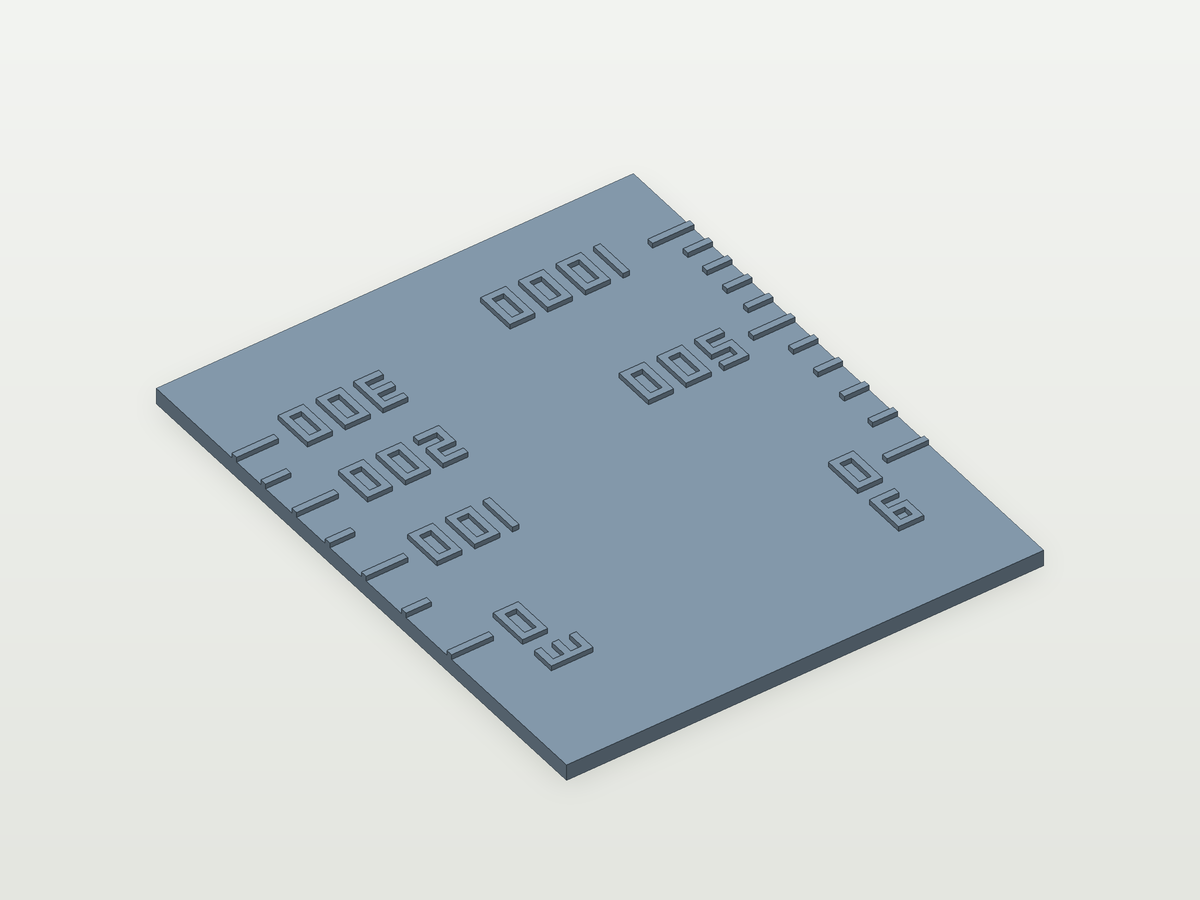
The gauge from above, lying on the build plate — the tip is the end that goes into the spool

Drawn from the numbers in the form below, off the same geometry the file is cut from. It is not a photograph, and there is no photograph — every part that leaves here is a different size.
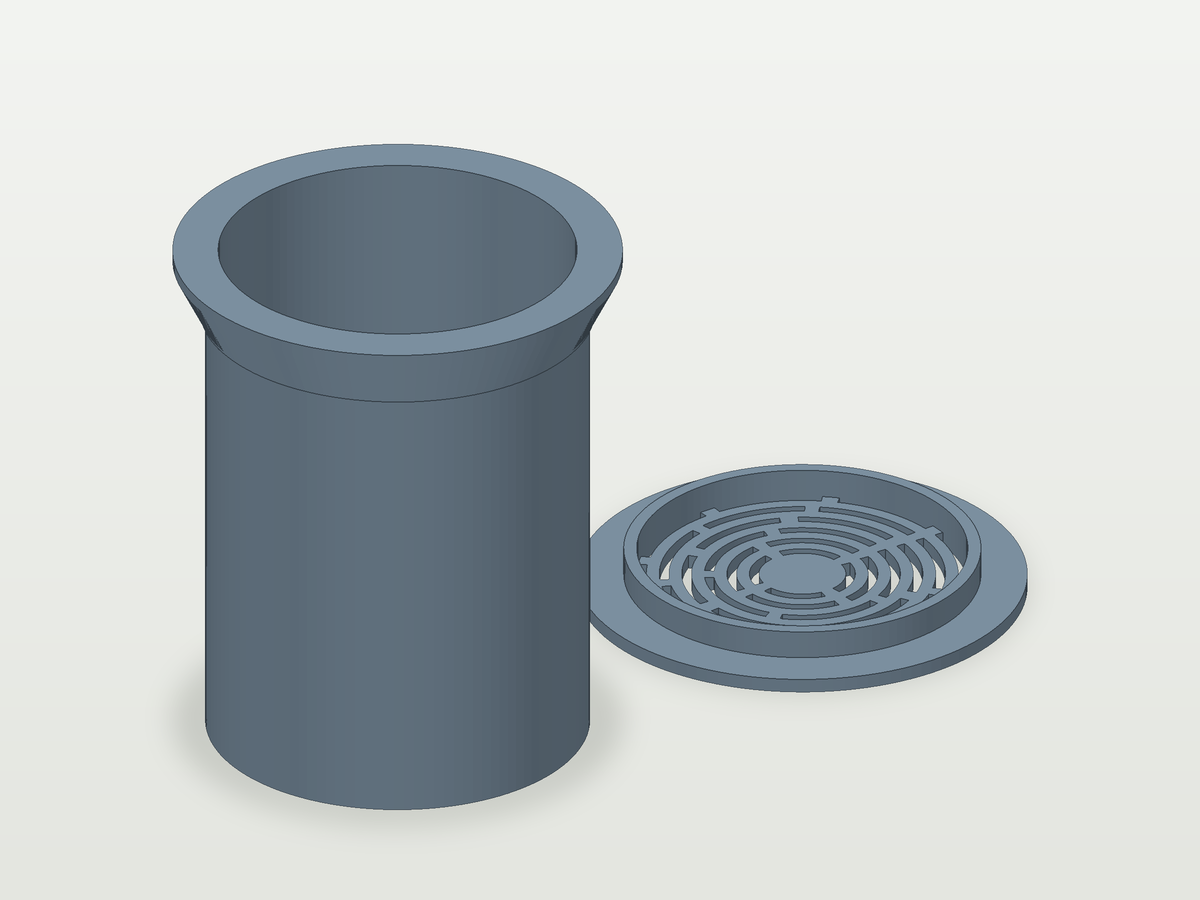
An empty spool of the same kind

The drum and the inside width are easiest on an empty spool. The drum is what the filament is wound on, not the hole in the middle.

mm
Across one of the two round sides of the spool, edge to edge through the middle. A ruler is fine: a large spool may be too wide for a calliper.
mm
Across the drum the filament is wound on — not the hole in the middle — measured on an EMPTY spool of the same kind. On a full spool the drum is hidden.
mm
The gap between the two flanges, inside, on the empty spool. If it is narrower at the rim than at the drum, give the narrower one: the gauge has to pass it.
A new spool, and its label

Before you print from it: how far below the edge of the flanges the filament sits, and what the label says. This is what the scale is worked out from.

mm
On a NEW spool, how far the filament sits below the edge of the flanges. Lay a ruler across both flanges and measure down to the filament. 0 if it is wound right up to the edge.
g
The filament weight printed on the label, without the spool.
Only the metres scale and our sanity check of your numbers use it. The grams scale comes from the label alone.
1.75 mm or 2.85 mm, as on the label.
The gauge

Both have a sensible answer filled in. A finer step crowds the marks; taller numbers need a wider spool.

How much filament each mark stands for. Near a full spool the marks crowd together, and the nozzle decides how close they can be.
mm
How tall the raised numbers are. Smaller numbers need a finer nozzle; larger ones need a wider spool.
The printer it will come off

The nozzle decides how close the raised marks can be without running together, which is why we ask.

The nozzle you will print with. It does not change the model — it decides how close the raised marks and numbers can be without running together.
Finer adjustments
mm
How much narrower than the inside width the gauge is drawn. It has to slide between the flanges; the more slack, the further it can twist in the gap and read out.

More for the workshop

  1. Desiccant core

    A silica-gel core for the hole in your spool, cut to the spool and to the beads you bought.

    What you need A calliper for the hole in the middle of the spool and the width of the spool beside it, and the bead size on your bag of silica gel.

    Try your numbers

  2. Spool hub adapter

    A ring that makes a spool with a big centre hole sit on a thinner axle or holder, cut to the hole of your spool and the size of your axle.

    What you need A calliper for the spool's centre hole and your axle, and the spool's width at the hole.

    Try your numbers

  3. Filament guide

    A push-on clip with a guide ring, cut to your sheet or to a 2020 extrusion.

    What you need A calliper for the sheet, or a 2020 extrusion, and your filament size.

    Try your numbers

Similar parts: Filament spool

See all 13 in Workshop and filament

Reviews

No reviews yet.

Reviews come from subscribers who have downloaded this part.